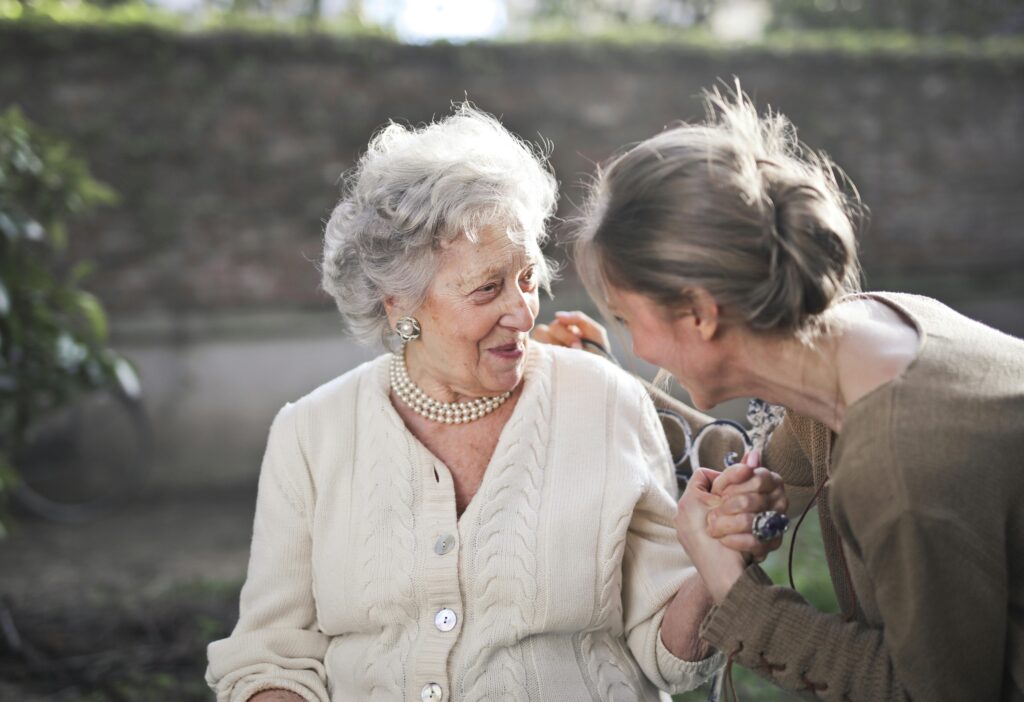
Photo by Bastian Riccardi from Pexels
Working in Rwanda changed the way I think about healthcare systems.
I was struck by the disconnect between healthcare institutions and the communities they were supposed to serve.
I saw people wait until they were incredibly sick before coming to the hospital because hospitals were often viewed as “where you go to die.”
I saw families forced to sell land, animals, and whatever resources they had to pay for medical care.
I saw women pushed to give birth in crowded hospitals away from their trusted support systems and communities, while hospital-acquired infections remained a rampant problem.
And I kept noticing the same tension underneath all of it:
mistrust
power dynamics
disconnection
systems designed around institutions more than relationships
At the same time, I also saw something else that deeply shifted my perspective.
I saw how much care was already happening inside communities long before someone entered a hospital.
I saw strong community health worker networks woven into daily life.
People checking on neighbors.
Families supporting each other through illness.
Information spreads through trusted relationships.
Communities stepped in to help long before formal systems could.
And what struck me was that these community support systems often had something that formal healthcare systems struggled to build:
trust
relationship
cultural understanding
continuity
proximity to people’s actual lives
Community health workers especially stood out to me.
They weren’t just delivering healthcare information. They understood the families, the barriers, the culture, and the realities people were navigating every day. They could bridge gaps between healthcare institutions and communities in ways hospitals alone often couldn’t.
Early in my career, I unconsciously viewed healthcare institutions as the center of care.
But what I started realizing was that communities themselves are carrying enormous amounts of care already.
Healthcare systems, hospitals, and clinicians are important.
But institutions are only one part of what keeps people healthy.
Communities are doing the work too.
And often, they’re doing it without recognition, funding, support, or meaningful partnership.
That realization made me start questioning why healthcare systems so often operate separately from the very community networks that people already trust and rely on.
Why are we building systems around institutions instead of around relationships?
Why do we invest so heavily downstream while underinvesting in the people and networks helping families stay healthy upstream?
Why are community support systems treated like an “extra” instead of part of the healthcare infrastructure itself?
When healthcare systems fail to partner with communities, people fall through the gaps between them.
But when communities are truly centered in care design, healthcare starts becoming more relational, accessible, trusted, and sustainable.
That experience changed the questions I started asking.
Not: “How do we get communities to adapt to healthcare systems?”
But: “How do we build healthcare systems that strengthen the communities already caring for people every day?”